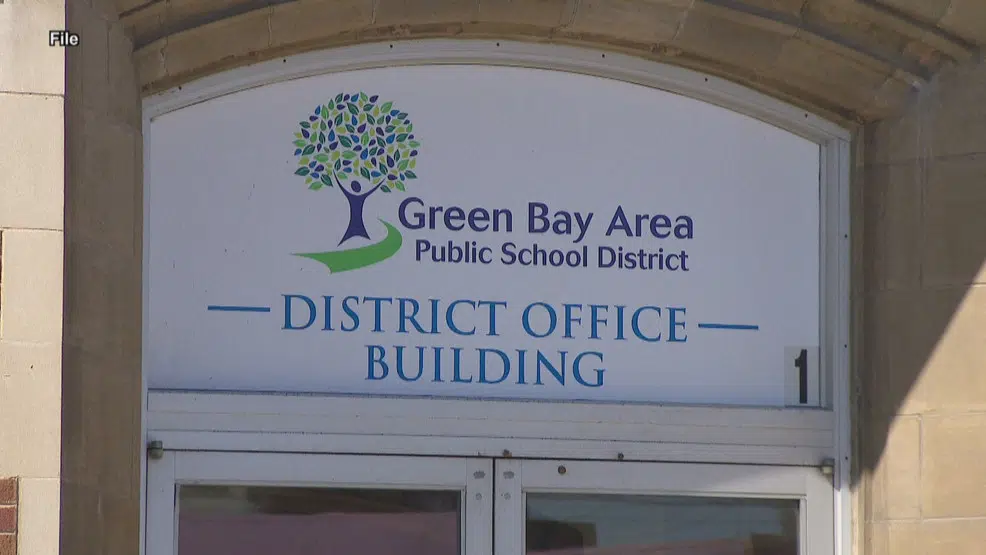
Green Bay Area Public School District building. (IMAGE: Courtesy of Fox 11 WLUK)
GREEN BAY, WI (WTAQ-WLUK) — Northeast Wisconsin school districts are speaking out for the first time since a budget surplus deal failed last week in the state Senate.
Districts across Wisconsin had been banking on receiving millions of dollars for special education reimbursements.
Green Bay Area Public School District Superintendent Vicki Bayer is urging state lawmakers to restart talks.
“My hope, minimally, would be that they get back to the table and at least bring special education as its own vote, separated from everything else, because again, there’s bipartisan support for that,” Bayer said.
She said the state Senate’s decision to reject the budget surplus agreement negotiated between Democratic Gov. Tony Evers and Republican legislative leaders will hurt schools statewide. Public school districts were set to receive $600 million as part of the deal.
$300 million was proposed to go toward general school aid, while the other half was set aside for 50% special education reimbursements. That would have been a 15% increase from the current 35%. Bayer said the rejection of the deal was a huge letdown.
“Every year, we shift over about $36 million from our general fund over to special education to meet the financial needs of supporting those students, and I’ve said this multiple times and I mean it: Those kids deserve it, but it’s expensive,” Bayer said.
She said any additional state support for special education would have helped GBAPS preserve more money in its general fund and stabilize its finances. Cuts in or closures of Green Bay schools won’t happen as a result of the failed bill, but Bayer said cuts to her district and others become more likely if education funding issues aren’t resolved in Madison soon.
“We will continue to see referendums, and the burden falls back on our property owners, the taxpayers, when it shouldn’t,” Bayer said.
Three Senate Republicans joined 15 Senate Democrats in voting “no” to the deal. Many Democrats said they worried it would have created a deficit in the next state budget.
On a smaller scale, the Wrightstown Community School District is also disappointed by the failed bill.
“We’re right there. We’re not going to definitely have any money left for other projects that potentially we would have had if this money would have came through,” Interim Superintendent James Smasal said.
He said fortunately, the district was conservative with its budgeting this year, but the additional money would have indirectly helped them fund new curriculum for K-6 and cover a 12% hike for its buses next year. Smasal said he’s losing faith in the state’s legislators.
“There’s this underlying message that we have to stay on the party line, and I wish that somehow, that mold could be broken,” Smasal said.
He doesn’t expect lawmakers to restart negotiation talks, but hopes future state budgets include more substantial funding for public schools.





Comments